.webp)
The Shifting Landscape of Legal: How AI is Reshaping Justice in Malaysia
Key Takeaways
- AI-Driven Transformation: Artificial intelligence is fundamentally changing legal research, case preparation, and client advisory in Malaysia, enhancing efficiency.
- Advanced Legal Platforms: Tools like Lexis+ AI process vast data, generate insights, streamline document drafting, and provide predictive analytics for legal professionals.
- Specialized Applications: AI assists in navigating complex legal areas, including data privacy compliance, nuances of legal immunity, and ethical considerations in emerging fields like gene therapy.
- Human Expertise Remains Crucial: While AI boosts efficiency, the judgment, empathy, and strategic thinking of human lawyers are still indispensable for interpreting data and serving clients.
In an increasingly digital world, the very fabric of our societies is undergoing a profound transformation. From how we communicate to how we conduct business, technology is the undeniable engine of change. And nowhere is this more evident than in the seemingly traditional realm of the legal profession. This week, we dive deep into one of the most exciting and trending AI news stories: how artificial intelligence is not just a futuristic dream, but a present-day reality, actively reshaping the legal landscape in Malaysia.
Imagine a world where complex legal research takes moments instead of days, where patterns in vast amounts of legal data become clear, and where lawyers can dedicate more time to their clients rather than tedious administrative tasks. This isn't science fiction; it's the promise and unfolding reality of AI in the legal field. Malaysia, with its rich legal heritage and forward-looking embrace of technology, stands at the cusp of this exciting revolution.
This article will explore the foundational aspects of the Malaysian legal system, revealing its intricate structure and key areas, before diving into how cutting-edge AI is being woven into its very fabric. We'll uncover how these powerful tools are enhancing legal research, streamlining processes, and ultimately making justice more accessible and efficient for everyone.
Understanding Malaysia's Legal Foundation: A Tale of Two Courts
Before we delve into the exciting world of AI, it’s important to understand the stage upon which this technological drama is unfolding: the Malaysian legal system. It’s a rich and layered framework that guides every aspect of life, from personal matters to large-scale business ventures.
When you need help with a legal problem, it's good to know where to start. Whether you're an individual seeking guidance or a business looking to set up shop, understanding the legal framework is crucial. For instance, if you're an independent consultant exploring how to establish a legal entity, or if you simply need advice on a personal issue, knowing about legal assistance can be a good first step, even though this particular resource is for U.S. citizens, it points to the general need for legal help. The core of it is knowing who to turn to1.
The Malaysian legal system is quite special, and it’s been described as "a tale of two courts." This means it has a complex interplay of different court systems working together. A deeper dive into the Malaysian legal system helps us understand this better. It highlights how the system is designed to handle various types of cases, from everyday disputes to more specialized legal issues. This intricate structure ensures that different laws, including civil, criminal, and Syariah (Islamic) laws, are applied correctly, reflecting Malaysia's diverse society. It's a system built on deep historical roots and continuous adaptation, always aiming for fairness and justice2.
Imagine a grand building with many different rooms, each designed for a specific purpose. That's a bit like the Malaysian court system, with different courts handling different types of cases, from Magistrates' Courts dealing with smaller matters to the Federal Court, which is the highest court in the land. This layered approach ensures that everyone has a chance to have their case heard fairly, and that justice is served according to the specific laws that apply. This foundation is key, because AI is now stepping in to make navigating this complex system even smoother.

The concept of law and justice is foundational to any nation's development, guiding its societal structure and future. In Malaysia, a robust legal framework underpins the country's progress, serving as the basis for its evolving legal landscape.
The AI Revolution: Lexis+ AI Leading the Charge in Malaysian Legal Practice
Now, let's talk about the real game-changer: the role of technology, especially AI, in transforming the legal profession. This isn't just about faster typing; it's about fundamentally changing how legal research is done, how cases are prepared, and how lawyers advise their clients. The impact of technological advancements is becoming increasingly evident, and Malaysia is right at the forefront of this shift.
One of the most prominent examples of this thrilling development comes from LexisNexis Malaysia. LexisNexis has long been a trusted name in providing legal and professional solutions. They offer a wide array of products and services that empower legal professionals with the tools they need to succeed. But what's truly exciting is their embrace of artificial intelligence3.
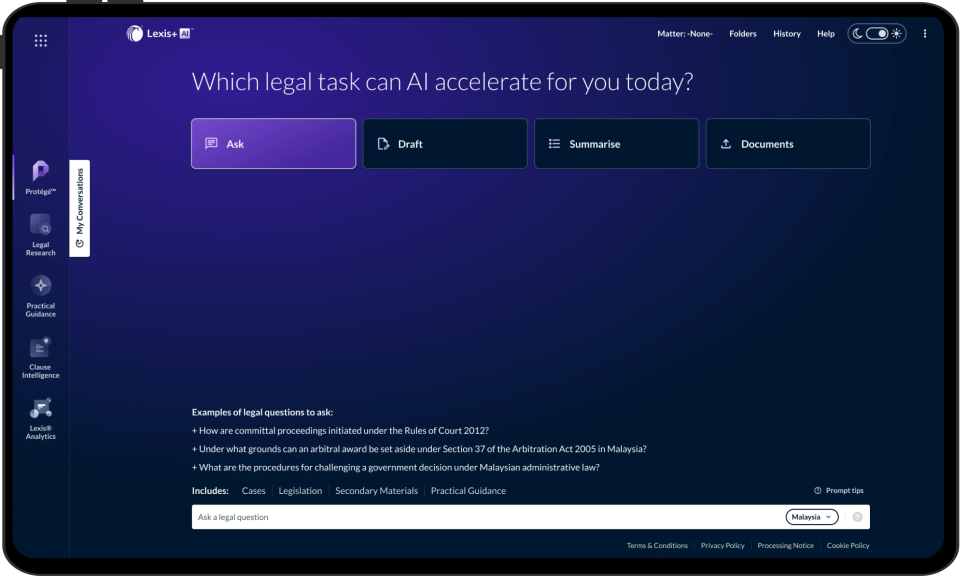
Enter Lexis+ AI, a groundbreaking legal AI and research platform that is truly reshaping legal research and practice in Malaysia and beyond. You can get a glimpse of this revolutionary tool through resources like the Lexis+ AI Legal AI & Research Platform page. This platform isn't just an upgrade; it's a leap forward4.
So, what exactly does Lexis+ AI do?
Imagine a lawyer needing to find every single case, statute, and legal article related to a very specific and niche area of law. Traditionally, this could take hours, if not days, of meticulous searching through physical books and digital databases. With Lexis+ AI, this process is dramatically accelerated. The platform uses advanced artificial intelligence to:
- Process vast amounts of data at lightning speed: Lexis+ AI can sift through countless legal documents, court decisions, and academic writings in mere moments. It doesn't just find keywords; it understands the context and nuances of legal language, making its search results incredibly relevant.
- Generate summaries and insights: Instead of just giving a long list of documents, AI can summarize key points from complex cases or statutes. It can identify trends in judicial decisions, helping lawyers understand how courts are likely to rule on similar issues in the future. This is like having a super-smart assistant who not only finds the information but also helps you understand it quickly.
- Draft documents with greater efficiency: While AI isn't replacing human lawyers, it can assist significantly in drafting routine legal documents, contracts, and briefs. This frees up lawyers' valuable time to focus on strategic thinking, client interaction, and the more complex aspects of their cases.
- Enhance predictive analytics: By analyzing historical data, Lexis+ AI can help predict potential outcomes of cases, assess litigation risks, and even estimate settlement values. This empowers legal teams to make more informed decisions, advising their clients with greater confidence and foresight.
- Personalize research: The AI learns from a user's research patterns and preferences, offering more tailored and relevant suggestions over time. This makes the research process even more intuitive and efficient, adapting to the specific needs of each legal professional.
The emergence of platforms like Lexis+ AI means that legal professionals in Malaysia are now equipped with tools that were unimaginable just a few years ago. This isn't about making lawyers redundant; it's about making them more powerful, more efficient, and better able to serve their clients. It’s about leveraging technology to uphold the principles of justice in a fast-paced, modern world. This is truly trending AI news that is revolutionizing a fundamental pillar of our society. For those interested in the intersection of property and legal matters, it's worth considering how these advancements impact areas like tax optimization5.
AI's Eye on Specific Legal Realms: From Data Privacy to Gene Therapy
The power of AI isn't limited to general legal research; it extends into highly specialized areas, helping legal minds navigate increasingly complex regulations and emerging fields. As Malaysia continues to evolve, so do its legal needs, and AI is proving to be an invaluable ally.
Take, for instance, the intricate world of data privacy. In today's digital age, the processing of personal data is a constant concern for individuals and businesses alike. Understanding the rules around this is vital. Legal frameworks, such as those addressed in resources covering legal bases for processing personal data, lay out how personal information can be collected, stored, and used. AI tools can play a significant role here by6:
- Automating compliance checks: AI can scan contracts and policies to ensure they meet data protection standards, flagging potential violations or areas needing attention.
- Managing data inventories: For large organizations, knowing where all personal data is stored and how it's being used can be a monumental task. AI can create comprehensive maps of data flows, making compliance much easier.
- Responding to data subject requests: When individuals ask for their data or request its deletion, AI can help process these requests more quickly and accurately, ensuring timely compliance with privacy laws.
Another fascinating area where AI’s analytical capabilities could be revolutionary involves the nuances of legal immunity. Some situations involve specific individuals or entities having protection from legal processes. Understanding these subtleties, as explored in discussions on immunity from legal processes, requires careful analysis of international law and specific agreements. AI could assist by7:
- Analyzing international precedents: AI can quickly access and analyze countless international court decisions and treaties to provide lawyers with comprehensive information on immunity cases worldwide.
- Identifying specific clauses: In complex legal texts, AI can pinpoint the exact clauses and conditions under which immunity applies or does not apply, saving legal experts significant time.
Even in areas that might seem far removed from technology, like specific social regulations, AI can offer valuable insights. For example, understanding gambling in Malaysia requires delving into specific laws and their societal impacts. AI could analyze8:
- Regulatory trends: By processing legislative changes and public discourse, AI can identify evolving patterns in how gambling laws are being enforced or debated.
- Socio-economic impact analysis: AI could help researchers analyze vast datasets to understand the broader societal and economic effects of gambling regulations, providing robust data for policy-making.
Lastly, the legal implications of emerging scientific areas are becoming increasingly important. Consider the exciting, yet complex, field of advancing precision medicine with gene and cell therapy. This cutting-edge science brings with it a host of ethical, regulatory, and patent law questions. AI can be instrumental in9:
- Mapping regulatory frameworks: AI can help legal researchers identify and compare regulations related to gene and cell therapy across different jurisdictions, highlighting key differences and best practices.
- Patent analysis: The intellectual property surrounding these therapies is immensely valuable. AI can analyze patent databases to help lawyers understand patent landscapes, identify potential infringement, or assist in drafting strong patent applications.
- Ethical consideration analysis: AI can process academic papers and policy discussions to help legal professionals understand the evolving ethical considerations and legal precedents surrounding such advanced medical treatments.
In essence, AI acts as a super-powered assistant, capable of tackling information overload and extracting critical insights across the entire spectrum of legal practice. This allows Malaysian lawyers to stay ahead of the curve, whether dealing with established laws or pioneering legal frameworks for tomorrow's innovations. This analytical prowess also has implications for understanding global property wealth management and how laws shape investment strategies10.
Finding Legal Expertise in the Age of AI: The Human Touch Remains Essential
While artificial intelligence is undeniably transforming the legal landscape, making processes more efficient and research more potent, it's crucial to remember that the core of the legal profession remains deeply human. AI is a tool, a powerful one, but it doesn't replace the wisdom, empathy, and strategic thinking of a human lawyer. In Malaysia, finding the right legal expertise is still paramount, and thankfully, resources are readily available.
Even with the most sophisticated AI platforms like Lexis+ AI at their disposal, lawyers still need to interpret the data, understand the unique circumstances of each client, and craft compelling arguments. AI can provide information, but it cannot provide judgment, negotiation skills, or the personal connection that clients often need during challenging times.
So, how do people in Malaysia find a lawyer in this evolving legal world? The good news is that established and trusted avenues are still the best place to start. For anyone seeking legal services, the Malaysian Bar is the primary professional body representing lawyers in Peninsular Malaysia. It serves as a vital resource for both legal professionals and the public11.
One of the most valuable services provided by the Malaysian Bar is its directory, making it easier for individuals and businesses to connect with the right legal expert. You can find information on specific legal services and locate qualified practitioners through its "Find A Lawyer" service. This online directory allows you to search for lawyers based on their area of practice, location, and other criteria, ensuring that you can find someone with the specific expertise your situation requires12.
Here’s why platforms like the Malaysian Bar's "Find A Lawyer" remain indispensable even with the rise of AI:
- Human Judgment and Strategy: No AI can fully replicate a lawyer's ability to develop a legal strategy, understand human motivations, or navigate complex courtroom dynamics.
- Client Relationship: Legal issues are often personal and emotional. Clients need empathy, trust, and direct communication, which only a human lawyer can provide.
- Ethical Considerations: Lawyers are bound by strict ethical codes, ensuring client confidentiality and professional conduct. While AI can assist, the ultimate ethical responsibility lies with the human practitioner.
- Negotiation and Advocacy: Many legal cases involve negotiation, mediation, and advocacy in court. These are skills that require human intuition, persuasion, and the ability to react to unforeseen circumstances.
In essence, AI empowers lawyers, making them more efficient, more informed, and better equipped to handle the demands of modern legal practice. It allows them to focus on what they do best: applying their knowledge, experience, and human judgment to serve their clients' best interests. The blend of cutting-edge technology and time-honored human expertise creates a stronger, more dynamic legal system for everyone in Malaysia. For instance, understanding property taxation requires both AI-driven insights and human expertise.
The Future is Now: Embracing AI for a More Accessible and Efficient Legal System
As we've journeyed through the intricate landscape of legal practice in Malaysia, one thing has become abundantly clear: the future is here, and it's powered by AI. From the foundational structure of the Malaysian legal system, with its "tale of two courts," to the nuanced applications of law in areas like data privacy and emerging medical science, artificial intelligence is no longer a distant concept but an active participant in shaping how justice is sought and delivered.
The rise of platforms like Lexis+ AI represents a significant leap forward, offering unparalleled speed and accuracy in legal research, streamlining document drafting, and providing invaluable insights through predictive analytics. This is a game-changer, allowing legal professionals to dedicate more of their precious time to strategic thinking and, crucially, to the human element of their work—counseling and advocating for their clients.
We’ve seen how AI acts as a sophisticated assistant, helping navigate the complexities of personal data protection, understanding the subtleties of legal immunity, analyzing specific regulations like those concerning gambling, and even delving into the legal implications of pioneering fields such as gene and cell therapy. This capability to process vast amounts of specialized information quickly and accurately ensures that Malaysia’s legal practitioners can remain at the cutting edge, prepared for any challenge.
Yet, amidst all this technological marvel, the heart of the legal profession—the human lawyer—remains indispensable. AI enhances, but does not replace, the critical thinking, ethical judgment, and empathetic counsel that only a human can provide. Resources like the Malaysian Bar’s "Find A Lawyer" service continue to be vital, connecting individuals with the expert human guidance they need.
The integration of AI into Malaysia’s legal framework is a testament to the nation’s embrace of innovation and its commitment to continually improving its systems of justice. It promises a future where legal services are not only more efficient and precise but also more accessible to a wider populace. This fusion of traditional legal foundations with state-of-the-art artificial intelligence creates a vibrant and forward-looking legal environment, ensuring that Malaysia remains at the forefront of legal evolution. These changes also impact global strategies, especially in areas like estate tax and international residency.
As this exciting journey continues, one thing is certain: the conversation around AI in the legal field will only grow. Staying informed about these developments isn't just for lawyers; it's for anyone interested in how technology is making the world a fairer, more efficient place. The legal landscape is indeed shifting, and the changes are nothing short of thrilling. Property wealth management, for instance, will continue to be shaped by these technological and legal advancements.
Frequently Asked Questions
Question: How is AI currently impacting the legal profession in Malaysia?
Answer: AI is transforming legal research by accelerating data processing, generating summaries, assisting in document drafting, and enhancing predictive analytics, making legal practices more efficient and precise.
Question: What is Lexis+ AI and how does it benefit legal professionals?
Answer: Lexis+ AI is a groundbreaking legal AI and research platform that processes vast amounts of legal data at high speed, provides insights, assists with document drafting, and personalizes research, empowering lawyers to serve clients more effectively.
Question: Does AI replace the need for human lawyers in Malaysia?
Answer: No, AI acts as a powerful tool that enhances lawyers' capabilities, allowing them to focus on strategic thinking, client interaction, and ethical judgment, which are indispensable human roles in the legal profession.
Disclaimer: The information is provided for general information only. BridgeProperties makes no representations or warranties in relation to the information, including but not limited to any representation or warranty as to the fitness for any particular purpose of the information to the fullest extent permitted by law. While every effort has been made to ensure that the information provided in this article is accurate, reliable, and complete as of the time of writing, the information provided in this article should not be relied upon to make any financial, investment, real estate or legal decisions. Additionally, the information should not substitute advice from a trained professional who can take into account your personal facts and circumstances, and we accept no liability if you use the information to form decisions.