
.webp)
The Big Question: Renting vs Buying Condo in Malaysia – Unraveling the Surprising Math!
Key Takeaways
- Personalized Decision: The choice between renting and buying a condo in Malaysia is highly dependent on individual financial situations, lifestyle, and long-term goals.
- Financial Nuances: Beyond monthly payments, understanding the deeper economics, including interest rates, inflation, property taxes, and maintenance, reveals surprising math.
- Local and Economic Factors: Regional market conditions, current economic trends, and expert advice from institutions like KWSP significantly influence whether renting or buying is more advantageous.
The Great Debate: To Rent or To Own?
Hey there, future homeowner or savvy renter! Have you ever found yourself staring out the window, wondering whether it’s better to renting vs buying condo? It's a huge question, one that many people in Malaysia and around the world grapple with every single day. For most of us, choosing a home is one of the biggest decisions we'll ever make, filled with dreams, hopes, and, let's be honest, a lot of numbers!
This week, we're diving deep into the fascinating world of property, specifically focusing on the common dilemma of renting vs buying condo in our vibrant nation. Is there a right answer? Or is it more like a puzzle with many different pieces? Let's explore what the experts, fellow Malaysians, and even some surprising math have to say about this crucial choice.
The discussion about whether to rent or buy a property isn't new, but it's certainly heating up, especially in Malaysia. You can find people passionately discussing the pros and cons in all sorts of places, from online forums to detailed financial guides. It’s clear that many Malaysians are trying to figure out the best path for their future.
If you peek into online communities like Reddit's r/MalaysianPF, you’ll see countless stories and opinions from people just like us, asking: "Is it better to rent or buy a house?" This shows us that it’s a very real and important financial decision for many people living here. Everyone has their own reasons and experiences, making the debate rich and full of different ideas.
Unpacking the Economics: The Surprising Math Behind Your Home Choice
When we talk about renting vs buying condo, it’s easy to get caught up in feelings. But what do the cold, hard numbers tell us? It turns out, there’s some surprising math involved when you compare renting to buying a condo in Malaysia.
Imagine seeing charts and graphs that show you exactly where your money goes in both scenarios. Well, some clever folks have already done the hard work! They’ve created visual guides that break down the financial journey of renting versus buying. One such example highlights "the surprising math" behind this decision, giving us a clearer picture of the financial ups and downs involved. You can take a peek at some of these insightful visuals and discussions on platforms like Instagram and Threads, where people are really digging into the nitty-gritty details. These visuals help us understand the real costs and potential gains, far beyond just the monthly payment.
For example, imagine a scenario where you pay RM1,500 in rent every month. Over 10 years, that’s RM180,000 you've spent that doesn't build any ownership for you. But if you buy, that RM1,500 (or more, factoring in other costs) could be contributing to owning your very own asset. These visual breakdowns make it much easier to compare these paths.
Here's a visual that helps explain some of these financial ideas:
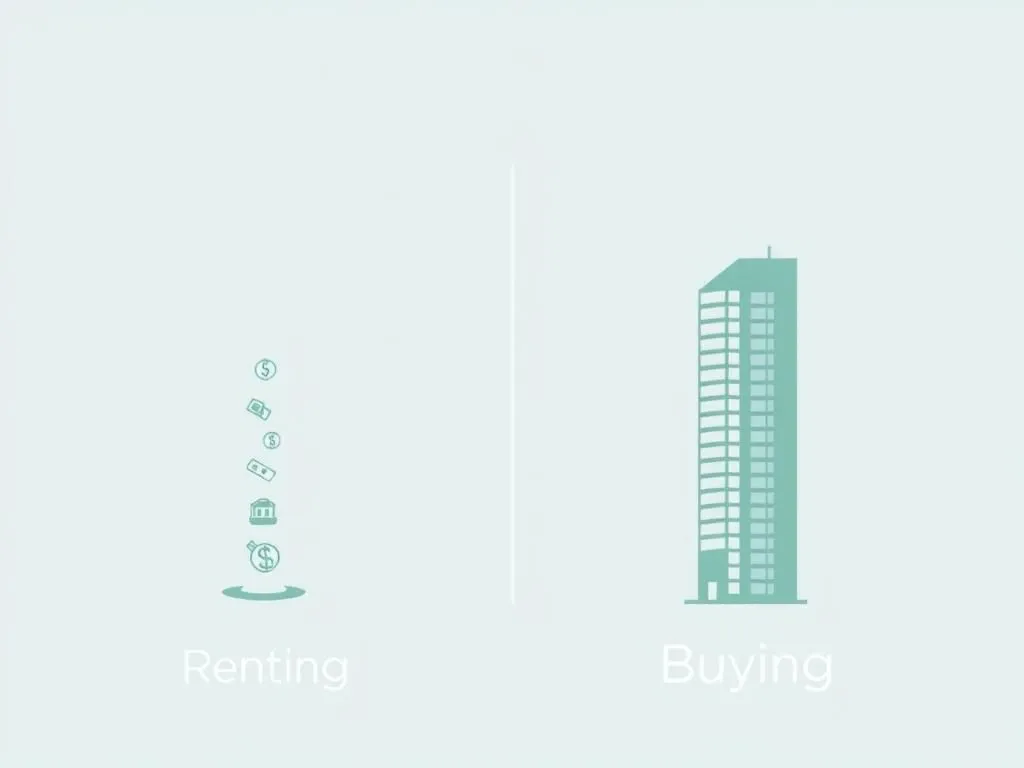
A visual comparison of the financial aspects of renting versus buying a condo in Malaysia, illustrating costs and benefits.
This kind of visual aid really helps to simplify complex financial ideas, showing us the path our money takes whether we choose to rent or to buy. It's not always as simple as "rent is throwing money away," nor is "buying always an investment." The actual math can be quite eye-opening!
Location, Location, Location: Regional Differences and Personal Stories
It’s not just about the numbers; where you live makes a huge difference too! The discussion about renting vs buying condo isn't a one-size-fits-all conversation across Malaysia. What might be a good idea in Kuala Lumpur could be very different in Johor Bahru, for example.
People often share their personal experiences and regional insights on social media. For instance, in a Facebook group, there was a lively discussion asking: "What do you think about renting versus buying a property in Johor Bahru?" These kinds of conversations highlight that local market conditions, property prices, job opportunities, and even future development plans all play a big role in the decision.
Someone living in an area with rapidly increasing property values might lean towards buying, hoping their property grows in value. On the other hand, someone in a slower market, or someone who isn’t sure they’ll stay in one place for a long time, might find renting more flexible and sensible. These real-life stories and regional insights add important layers to the big renting vs buying condo question. They remind us that our personal circumstances and location are key ingredients in this decision-making recipe.
The Economy's Influence: Rent or Buy in Today's World?
Our economy is always changing, and these changes definitely affect whether renting or buying makes more sense. Think about things like interest rates, inflation, and how much jobs pay. These factors can swing the pendulum for many people.
Another interesting discussion on Reddit's r/MalaysianPF explored this very point: "Rent or buy — in today's economy, which one makes more sense?" This question is super important because what might have been a good financial move five years ago might not be the best idea today. When interest rates are low, buying a home can seem very appealing because your monthly loan payments might be more affordable. But when rates go up, buying can become much more expensive.
Also, the cost of living and how quickly salaries are growing (or not growing) can make a big difference. If rents are skyrocketing, buying might look like a way to get stable housing costs. But if property prices are very high and likely to drop, renting might feel safer. It's a tricky balance, and staying informed about the broader economic landscape is crucial when weighing your options. The economy is like a giant seesaw, and it can tilt the decision one way or another.
Smart Investments: Can You Buy a Property and Rent It Out Immediately?
Some people dream of buying a property not just to live in, but also as an investment to rent out to others. This brings up another interesting question: "Can you buy a property in Malaysia and rent it out the next day?"
This is a very practical consideration for those thinking about becoming property owners. The idea is simple: buy a place, and have someone else's rent payments help you cover your mortgage. This sounds like a smart move, right? However, there are rules and things to consider.
For example, you need to think about the type of property, local regulations, and finding reliable tenants. Some people might wonder if there’s a waiting period or specific procedures you need to follow before you can start renting out a newly purchased home. Discussions in various online groups, like specific Facebook groups focused on property, often shed light on these practical matters, offering advice from people who have gone through the process themselves. They help us understand the logistics and potential challenges of turning a new purchase into an immediate income stream. This adds a layer of complexity to the renting vs buying condo question, especially for those with an investment mindset.
Wisdom from the Experts: KWSP's Five Key Questions
When it comes to big financial decisions, getting advice from trusted institutions is always a good idea. In Malaysia, the Employees Provident Fund (KWSP), often known as EPF, offers some really helpful guidance for members trying to decide between buying and renting. They’ve laid out "5 Questions to Help You Decide" when looking at the "Buy vs Rent in Malaysia" dilemma.
These questions are designed to make you think deeply about your financial situation and future goals. They might ask you about your savings, your job stability, how long you plan to stay in one place, and your long-term financial plans. For example, KWSP often encourages members to consider using their EPF savings for a home purchase, but only after careful consideration of their retirement needs.
Their advice emphasizes looking at the bigger picture and not just the immediate costs. It’s about understanding your ability to manage a long-term loan, cover maintenance costs, and ensure you have enough saved for your later years. Listening to these experienced voices can provide a solid foundation for making your personal renting vs buying condo decision. They remind us that this isn't just about finding a roof over our heads; it’s about securing our financial future.
Looking Ahead: Renting vs. Buying for Retirement
The renting vs buying condo debate doesn't just apply to our younger years; it's also a big question as we look towards retirement. Imagine you're approaching your golden years. Does it make more sense to own a home outright, or to rent?
Financial institutions like Sun Life have explored this very topic, asking: "Renting Vs. Buying A House: Which Is Better For Retirement?" This perspective is crucial because what seems like a good idea in your 30s might change when you're in your 60s or 70s.
When you own a home without a mortgage in retirement, it means you have no major housing payments, which can free up a lot of money for other things like travel or hobbies. However, owning also comes with property taxes, maintenance, and insurance costs, which can still be significant. On the other hand, renting offers flexibility. You can downsize easily, move to be closer to family, or choose a place with services that simplify life, without the burdens of home maintenance.
For some, the stability and comfort of owning a home they've paid off is priceless. For others, the freedom from maintenance worries and the ability to relocate easily that renting provides is more appealing. This shows that the best choice changes throughout different stages of life, and what’s right for retirement might be different from what’s right today.
General Wisdom: Tips for Your Big Decision
Beyond the specific Malaysian context, there’s a lot of universal advice that can help anyone thinking about renting vs buying condo. Understanding these general tips can help you make a more informed choice, no matter where you are.
Resources like "Renting vs Buying a Home in Canada – Tips for Decision" offer broader insights that are helpful everywhere. These tips often include:
- Check Your Finances: Can you afford a down payment? Do you have enough savings for closing costs and emergencies?
- Think Long-Term: How long do you plan to stay in one place? If it’s only a few years, renting might be cheaper than buying and selling.
- Understand All Costs: Don't just look at the monthly mortgage or rent. Remember property taxes, insurance, maintenance, and utility bills for owners. For renters, consider security deposits and utility costs.
- Consider Flexibility: Renting offers more freedom to move. Owning ties you down to one location, which can be great if you love stability, but tricky if your job or life plans might change.
- Look at Your Lifestyle: Do you enjoy doing home repairs and gardening, or would you prefer someone else handles maintenance?
These fundamental questions help everyone, no matter their location, weigh the personal and financial aspects of their housing choice. They emphasize that the best decision is highly personal and depends on your unique situation.
The Road Ahead: Malaysia 2024 – Is Buying a Condo Better Than Renting?
So, what does the future hold for renting vs buying condo in Malaysia? As we move further into 2024 and beyond, this question remains a hot topic. Many are looking at future trends, market predictions, and economic forecasts to try and get an edge.
For instance, articles like "Malaysia 2024: Is Buying A Condo Better Than Renting?" from various property outlook sources delve into what experts predict for the Malaysian property market. They look at factors like new developments, government policies, population growth, and job markets to give us a glimpse into the future.
Will property values continue to rise in certain areas? Will renting become more affordable or more expensive? These are the questions property experts and analysts try to answer. They help us understand if conditions might favor buyers or renters in the coming years. While no one has a crystal ball, these future outlooks provide valuable context, helping prospective homeowners and renters make decisions that are not just right for today but also smart for tomorrow. Keeping an eye on these forecasts can be a powerful tool in your property journey.
The Final Word: Your Home, Your Choice
After exploring all these different angles – the debates, the math, the regional insights, economic factors, expert advice, and future outlooks – one thing becomes incredibly clear: there's no single "right" answer to the renting vs buying condo question.
Your perfect path depends entirely on your personal situation, your financial health, your life goals, and even where you want to put down roots. Are you someone who loves the stability and potential long-term investment of owning? Or do you value the flexibility and lower upfront costs of renting?
Both options have their own wonderful benefits and their own challenges. What's crucial is to do your homework, look at all the numbers, consider your lifestyle, and think about your future. Talk to financial advisors, discuss with friends and family, and most importantly, listen to your own instincts.
Whether you decide to rent a cozy apartment or buy your dream condo, the most important thing is that your home brings you comfort and fits perfectly into your life's grand plan. And when you're ready to explore options, remember that platforms like Property Guru can be a fantastic resource to help you find listings and compare properties, guiding you to your ideal living space. Happy house hunting, or happy renting!
It’s crucial to understand the challenges associated with buying property in Malaysia, especially for first-time buyers1.
Buying property in Malaysia often involves navigating a complex market with its own unique set of hurdles2.
Frequently Asked Questions
Question: What are the main factors to consider when deciding between renting and buying a condo in Malaysia?
Answer: The main factors include your financial stability, long-term plans for staying in one location, current interest rates, property market conditions, and your personal lifestyle preferences regarding home maintenance and flexibility.
Question: How do economic conditions affect the rent vs. buy decision?
Answer: Economic conditions such as interest rates, inflation, and salary growth significantly impact this decision. Low interest rates can make buying more attractive, while high rents might push individuals towards ownership for stable housing costs.
Question: Can I use my EPF savings to buy a property in Malaysia?
Answer: Yes, the Employees Provident Fund (KWSP/EPF) offers guidance for members considering using their savings for a home purchase, encouraging deep thought about financial situation and future goals before making such a decision.
Disclaimer: The information is provided for general information only. BridgeProperties makes no representations or warranties in relation to the information, including but not limited to any representation or warranty as to the fitness for any particular purpose of the information to the fullest extent permitted by law. While every effort has been made to ensure that the information provided in this article is accurate, reliable, and complete as of the time of writing, the information provided in this article should not be relied upon to make any financial, investment, real estate or legal decisions. Additionally, the information should not substitute advice from a trained professional who can take into account your personal facts and circumstances, and we accept no liability if you use the information to form decisions.
