
.webp)
Unveiling Malaysia: A Southeast Asian Gem of Culture, Commerce, and Global Connections
Key Takeaways
- Diverse Identity: Malaysia is characterized by its unique geography and a harmonious blend of Malay, Chinese, Indian, and indigenous cultures, reflected in its traditions and festivals.
- Geopolitical Hub: Strategically located, Malaysia plays a crucial role in regional stability and global trade, fostering robust international ties and economic partnerships, including with the United States for critical minerals supply chains.
- Economic Diversification: The nation actively seeks to broaden its trade relationships beyond major powers, engaging with economic blocs like the European Free Trade Association to ensure resilience and growth.
- Internal Progress: Malaysia is committed to addressing human rights and societal development, with ongoing evaluations and efforts to strengthen its societal fabric and citizen well-being.
A Nation Defined: Geography, Demographics, and a Legacy of Diversity
From the bustling streets of Kuala Lumpur to the pristine rainforests of Borneo, Malaysia stands as a vibrant tapestry woven with rich history, diverse cultures, and burgeoning economic power. This dynamic Southeast Asian nation continually makes headlines for its strategic geopolitical role, its expanding trade relationships, and the ongoing evolution of its societal landscape. Join us as we journey through the heart of Malaysia, exploring what makes this country a truly captivating subject on the global stage.
Malaysia is a country with a distinct two-part geography: Peninsular Malaysia, bordering Thailand to the north, and East Malaysia, situated on the island of Borneo, sharing borders with Brunei and Indonesia. This unique geographical split contributes to its incredible natural diversity, from ancient jungles teeming with unique wildlife to stunning coastlines and coral reefs. For a comprehensive overview of its geography, demographics, and fundamental information, Wikipedia offers an excellent starting point1.
The nation is celebrated for its multicultural population, a harmonious blend of Malays, Chinese, Indians, and various indigenous groups. This diversity is reflected in its languages, cuisines, and festivals, creating a rich cultural mosaic that defines the Malaysian identity. Further exploration into Malaysia's fascinating history, its iconic flag, detailed map, population statistics, spoken languages, and prevalent religions can be found on Britannica2.
The national flag, known as Jalur Gemilang (Stripes of Glory), is a powerful symbol of the country's unity and its constituent states. Its design, featuring a star and crescent, proudly represents Islam, which is the official religion of the country.
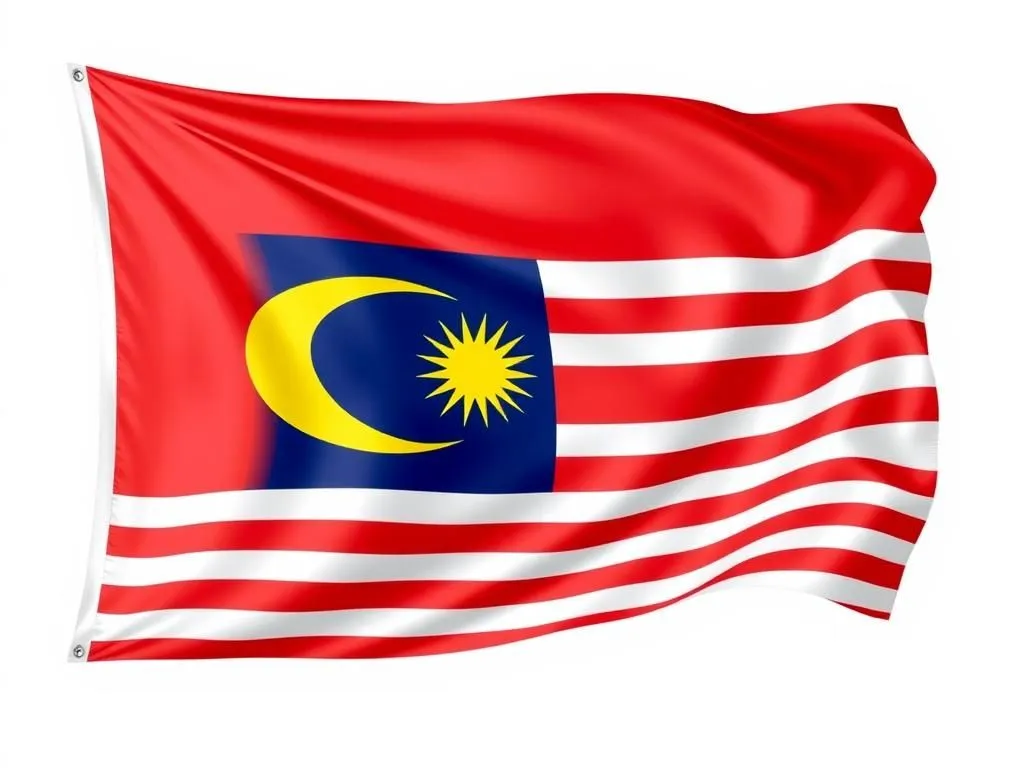
Malaysia's national flag, Jalur Gemilang or "Stripes of Glory," serves as a potent emblem of the nation's unity and its constituent states. Its design incorporates a star and crescent, reflecting Islam as the country's official religion. The flag stands as a testament to Malaysia's rich history and diverse identity.
This blend of cultures and geographies has not only shaped Malaysia's internal character but also plays a significant role in its external relationships and its standing in the wider world. The nation's general profile reveals a country that is both deeply rooted in tradition and forward-looking, consistently adapting to the complexities of the modern global landscape.
Geopolitical Significance: A Strategic Crossroads
Malaysia's location at the crossroads of major shipping lanes and its position within Southeast Asia lend it considerable geopolitical significance. It serves as a vital bridge between East and West, influencing regional stability and global trade routes. This strategic importance is frequently highlighted in international discussions, particularly concerning economic partnerships and supply chain resilience.
The country's commitment to fostering strong international ties is perhaps best exemplified by its robust trade relationships. These partnerships are crucial for Malaysia's economic growth and its ability to participate effectively in the global market. A recent and notable example of this commitment is the memorandum of understanding signed between the United States and Malaysia. This agreement focuses on cooperation to diversify global critical minerals supply chains, a testament to Malaysia's growing role in securing essential resources for the future. Such collaborations underscore the nation's pivotal position in global economic strategies, ensuring that vital materials can move freely and reliably across borders. You can find more details on this important agreement from the White House3.
This particular memorandum of understanding (MOU) is not just a piece of paper; it represents a shared vision for economic security and stability. Critical minerals are the building blocks of modern technology, from smartphones to electric vehicles, and ensuring a diverse and resilient supply chain for these minerals is paramount for industrialized nations worldwide. Malaysia's involvement signifies its increasing capacity and willingness to be a key player in these high-stakes global efforts. The partnership extends beyond simple resource extraction, hinting at potential for technological transfer, job creation, and advanced manufacturing opportunities within Malaysia, further strengthening its economic footprint.
Beyond this specific MOU, the broader trade relationship between the United States and Malaysia is well-documented. A fact sheet detailing reciprocal trade agreements between the two nations highlights a long-standing and mutually beneficial economic relationship. These agreements cover a wide range of goods and services, fostering an environment where both countries can thrive through open markets and fair competition. Such reciprocal arrangements are foundational to modern international trade, allowing for the specialization of industries and the efficient allocation of resources. The Office of the United States Trade Representative provides further insights into these agreements4.
Further emphasizing the strength of this partnership, a joint statement on the United States-Malaysia Agreement on Reciprocal Trade was also released. Joint statements are crucial diplomatic tools that reaffirm commitments, articulate shared goals, and signal to the international community the seriousness and depth of bilateral relations. This particular statement would likely underscore the strategic importance of the economic ties, the shared values that underpin the relationship, and future avenues for collaboration. It serves as a public declaration of mutual intent and confidence between the two governments. The White House also published this joint statement, providing a high-level perspective on the strategic alliance5.
These detailed agreements and statements paint a picture of Malaysia as a reliable and significant economic partner, not just within Southeast Asia but globally. Its role in critical mineral supply chains, coupled with broad reciprocal trade agreements, positions it as a stable and attractive destination for international investment and collaboration.
Expanding Horizons: Trade Beyond Borders
Malaysia's economic outreach isn't limited to its relationship with the United States. The nation actively seeks to diversify its trade partners and engage with various economic blocs worldwide. A prime example of this strategy is its relationship with the European Free Trade Association (EFTA). The EFTA, comprising Iceland, Liechtenstein, Norway, and Switzerland, represents a group of highly developed European economies. Malaysia's engagement with EFTA signifies its ambition to penetrate lucrative European markets and attract investment from these industrially advanced nations6.
The relationship between Malaysia and EFTA demonstrates a commitment to free trade principles and the creation of economic opportunities through reduced trade barriers and enhanced cooperation. Such agreements often cover not only goods but also services, investment, and intellectual property rights, creating a comprehensive framework for economic interaction. For more information on Malaysia's trade ties with this important European bloc, the EFTA website provides valuable insights.
These broad and varied trade connections highlight Malaysia's sophisticated approach to global economics. By engaging with major powers like the United States and established economic groupings like EFTA, Malaysia strengthens its position as a key player in international commerce, ensuring its economic resilience and continued growth in an ever-changing global marketplace. This diversification is a smart strategy, cushioning the country against reliance on any single market and opening up new avenues for innovation and prosperity. For those considering moving abroad, Malaysia presents itself as an attractive destination given its strong international ties and economic opportunities. Learn more about the considerations for international relocation and housing here7.
The Human Element: Internal Affairs and Human Rights Practices
While a nation's external trade and geopolitical standing are vital, a complete understanding of any country requires looking inward at its internal affairs, including its human rights practices. These domestic considerations reflect a country's values, its commitment to its citizens, and its adherence to international norms. Discussions about a country are incomplete without acknowledging these crucial internal aspects.
In Malaysia, as in many nations, human rights practices are an ongoing subject of evaluation and development. The 2024 Country Reports on Human Rights Practices: Malaysia, published by the U.S. Department of State, provides a detailed and candid assessment of the human rights situation within the country. These annual reports are a standard diplomatic tool used to review and highlight areas of concern, progress, and challenges in various countries around the world.
The report on Malaysia typically covers a wide array of human rights issues, including but not limited to:
- Respect for the Integrity of the Person: This section might examine topics such as arbitrary deprivation of life, enforced disappearance, torture, cruel, inhuman, or degrading treatment or punishment, and conditions in prisons and detention facilities. It often delves into issues related to fair trial and due process.
- Respect for Civil Liberties: This could include freedom of expression, including for the press, freedom of peaceful assembly and association, freedom of religion or belief, and freedom of movement. Limitations or restrictions on these freedoms are usually discussed.
- Freedom to Participate in the Political Process: The report often assesses the fairness of elections, the ability of citizens to choose their government, and the rights of political parties and opposition movements.
- Corruption and Lack of Transparency in Government: This critical area evaluates government transparency, efforts to combat corruption, and accountability mechanisms for public officials.
- Governmental Attitude Regarding International and Nongovernmental Investigation of Alleged Abuses: This section looks at how receptive the government is to scrutiny from international bodies and local NGOs regarding human rights issues.
- Discrimination and Societal Abuses: Issues related to discrimination based on race, gender, sexual orientation, disability, and other characteristics are typically addressed. This often includes reports on violence against women, child abuse, trafficking in persons, and societal discrimination against minorities.
- Worker Rights: The report frequently reviews freedom of association and the right to collective bargaining, prohibition of forced or compulsory labor, prohibition of child labor, and acceptable conditions of work.
These reports serve as important benchmarks for international dialogue and can influence bilateral relations and aid decisions. They encourage transparency and provide a framework for advocating for improvements in human rights conditions globally. For those seeking detailed information and a comprehensive understanding of human rights in Malaysia, the full report is an essential read8.
It is important to approach such reports with a nuanced perspective, recognizing that human rights situations are dynamic and subject to ongoing efforts for improvement by governments and civil society alike. The publication of these reports itself contributes to global awareness and the continued push for greater accountability and respect for fundamental freedoms. Malaysia, like any nation, faces challenges and opportunities in this area, and understanding these aspects is key to a holistic view of the country. For those considering relocating, understanding these aspects is crucial, as highlighted in our guide to international relocation9.
Practical Insights: Navigating Life and Travel in Malaysia
Beyond its cultural richness, economic prowess, and geopolitical standing, Malaysia also offers a wealth of practical information for travelers, residents, and those interested in its financial landscape. Whether planning a trip or considering a longer stay, understanding the day-to-day realities and available resources is incredibly helpful.
Health Advice for Travelers
For anyone considering a visit to Malaysia, health and safety are paramount. The Centers for Disease Control and Prevention (CDC) offers essential health advice for travelers, covering recommended vaccinations, precautions against common illnesses, and tips for staying healthy during your trip. This includes guidance on food and water safety, insect bite prevention, and what to do in case of a medical emergency. Prior to any international travel, consulting such resources is a fundamental step to ensure a safe and enjoyable journey. The CDC's dedicated page for Malaysia provides up-to-date recommendations10. It's always wise to check these guidelines close to your travel date, as health recommendations can sometimes change. If you are considering moving here be sure to compare this guidance to that of your current home, as noted in this article about finding your dream home abroad.
Financial Information and Stability
For those interested in Malaysia's economy, investments, or simply managing finances within the country, Bank Negara Malaysia (BNM) is the central bank and the authoritative source for financial information. BNM plays a crucial role in maintaining monetary stability, regulating financial institutions, and issuing currency. Their official website offers a wealth of data, publications, and announcements related to Malaysia's economy, financial policies, interest rates, and banking regulations. This is an indispensable resource for businesses, investors, and anyone seeking to understand the financial heartbeat of the nation. Explore their extensive resources here11. Understanding the central bank's policies provides insight into the broader economic outlook and stability of Malaysia.
Booking Flights and Exploring Connectivity
Connecting to Malaysia from around the world is made easy by its national carrier, Malaysia Airlines. As a major airline, it offers a wide range of international and domestic flight options, linking Malaysia to numerous global destinations and providing convenient access to various parts of the country. Whether you're planning a business trip to Kuala Lumpur, a beach holiday in Langkawi, or an adventure in Borneo, Malaysia Airlines serves as a primary gateway. Their website provides comprehensive flight booking services, travel information, and details on their network. To plan your journey and book tickets, visit12. The ease of access provided by such an airline is vital for tourism, business travel, and maintaining Malaysia's status as a global hub. International relocation is becoming more popular, Malaysia has increasingly become more connected.
These practical resources offer a comprehensive guide for anyone looking to engage with Malaysia, whether as a tourist, an expat, or an investor. They underscore the nation's infrastructure and its commitment to facilitating seamless connections with the rest of the world.
Malaysia's Enduring Journey: A Forward-Looking Perspective
From its enchanting cultural tapestry to its strategic economic maneuvers on the global stage, Malaysia continues to evolve as a nation of considerable importance and intrigue. We've explored its foundational profile, highlighting its unique geography and diverse population, which together form the bedrock of its national identity. The iconic Jalur Gemilang proudly flies over a land rich in history and tradition, yet constantly looking towards the future.
The nation's geopolitical significance is undeniable, cemented by critical partnerships like the memorandum with the United States on minerals supply chains and robust reciprocal trade agreements. Its proactive engagement with diverse economic blocs, such as the European Free Trade Association, further illustrates Malaysia's dynamic approach to global commerce and its commitment to economic resilience. These international relationships are not merely transactions; they are strategic alliances that underscore Malaysia's growing influence and its role as a stable, reliable partner in an interconnected world.
Internally, Malaysia actively navigates the complexities of human rights and societal development, as evidenced by detailed international reports. This ongoing self-assessment and external scrutiny are vital for any nation's progress, ensuring that growth is inclusive and equitable. By addressing these internal dynamics, Malaysia strengthens its societal fabric and reinforces its commitment to its citizens' well-being.
Finally, practical considerations, from essential health advice for travelers provided by the CDC to the guiding hand of Bank Negara Malaysia over the national economy, and the global reach of Malaysia Airlines, all contribute to a comprehensive picture of a country that is accessible, well-regulated, and ready to welcome the world.
As Malaysia continues its journey, balancing tradition with modernity, and local concerns with global responsibilities, it stands as a testament to the power of diversity, strategic partnerships, and continuous development. Whether you're drawn by its natural beauty, economic opportunities, or rich cultural heritage, Malaysia remains a compelling subject, a true gem in Southeast Asia, poised for an even more prominent role in the years to come. Deciding whether a country is the right fit requires extensive research.
Frequently Asked Questions
Question: What is Malaysia's official religion?
Answer: Islam is the official religion of Malaysia.
Question: What is the significance of the "Jalur Gemilang" flag?
Answer: The "Jalur Gemilang" (Stripes of Glory) symbolizes Malaysia's unity and its constituent states, with its star and crescent representing Islam, the country's official religion.
Question: What role does Malaysia play in global critical minerals supply chains?
Answer: Malaysia plays a growing role in diversifying global critical minerals supply chains, as highlighted by a memorandum of understanding with the United States to secure essential resources for modern technology.
Disclaimer: The information is provided for general information only. BridgeProperties makes no representations or warranties in relation to the information, including but not limited to any representation or warranty as to the fitness for any particular purpose of the information to the fullest extent permitted by law. While every effort has been made to ensure that the information provided in this article is accurate, reliable, and complete as of the time of writing, the information provided in this article should not be relied upon to make any financial, investment, real estate or legal decisions. Additionally, the information should not substitute advice from a trained professional who can take into account your personal facts and circumstances, and we accept no liability if you use the information to form decisions.
