
.webp)
Legal Tax Requirements for Dropshipping: Your 2024 Global Compliance Guide
Key Takeaways
- Mandatory Compliance: Businesses must understand and comply with tax and registration laws in their country and buyer markets.
- Malaysia’s Framework: Entrepreneurs operating in or from Malaysia must register with SSM and understand SST and income tax responsibilities.
- Global Challenges: Selling to countries like the US, UK, and Spain introduces new VAT, sales tax, and customs documentation duties.
- Models and Legalities: Pure and branded dropshipping models each come with their own regulatory obligations.
- Compliance Advantage: Following legal guidelines fosters operational stability, customer trust, and long-term growth.
What is Dropshipping?
Dropshipping is a business model in which the retailer doesn’t keep physical inventory but forwards customer orders to third-party suppliers who ship directly to the buyer, offering flexibility and low overhead1.
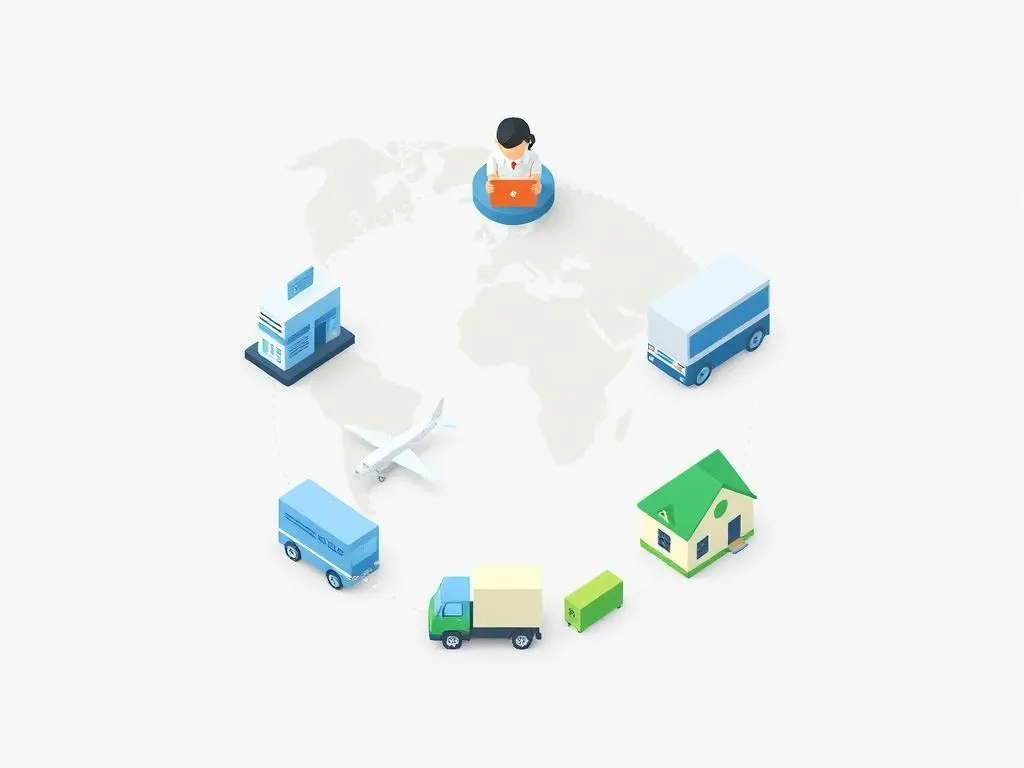
Lifecycle breakdown showing supply chain flow for online orders without inventory involvement
Why Legal Compliance in Dropshipping Matters
As cross-border eCommerce expands, regulators scrutinize seller operations more than ever, demanding compliance with registration, tax collection, and consumer transparency laws across jurisdictions2.
Starting With Malaysia: Legal & Tax Essentials
Malaysia’s efficient infrastructure and connectivity provide a competitive edge for dropshippers. However, understanding the business structure and compliance expectations is critical3.
Whether you operate domestically or export globally, the first legal step is registering your business with the Companies Commission of Malaysia (SSM), selecting from structures like sole proprietorship, partnership, or private limited company4.
If your dropshipping business involves warehousing, administration, or office use of rented space, Malaysia mandates local compliance with commercial licensing and zoning regimes5.
Tax compliance includes income tax for individuals or company tax for incorporated entities. SST may apply if local thresholds are breached based on annual revenue6.
Additional guidance clarifies SST eligibility and operational registration steps tailored for Malaysian dropshippers scaling globally7.
Global Legal Considerations for Cross-Border Sellers
As soon as your reach extends beyond borders, you must align with tax protocols imposed by your customers’ countries. Requirements vary greatly depending on government policy and EU/US law8.
If you sell to buyers in the US, even from Malaysia, you may establish "nexus" — a connection that triggers sales tax obligations state-by-state. Some major states enforce sales tax based on shipment frequency or turnover volume for foreign merchants9.
In the United Kingdom, once your sales to UK-based customers exceed the threshold or you warehouse goods there, you must register for VAT and submit regular declarations, regardless of company origin10.
Spain implements a similar mechanism. If you market to Spanish customers, your platform and suppliers must handle documentation and customs declarations accordingly or risk delivery interruptions and fines11.
Common Dropshipping Legal Structures to Consider
- Pure Dropshipping: Supplier handles fulfillment and shipping; your store lists items transparently, often under supplier branding.
- Branded Dropshipping: Products are relabeled or custom-packaged under your branding; more brand equity but greater liability and IP responsibility.
Frequently Asked Questions
Question: Do I have to set up a registered company to launch a dropshipping site?
Answer: Yes, in most countries you must register as a business regardless of inventory ownership, even when operations are home-based.
Question: Can I avoid paying VAT or SST if goods are never entered into the local country?
Answer: You may bypass sales/export tax in such cases, but income tax or corporate tax is still mandatory where the business is domiciled.
Question: Are all international shipments duty-free for customers?
Answer: Not necessarily—import duties generally fall to the buyer unless specified as Delivered Duties Paid (DDP) shipping by your store.
Disclaimer: The information is provided for general information only. BridgeProperties makes no representations or warranties in relation to the information, including but not limited to any representation or warranty as to the fitness for any particular purpose of the information to the fullest extent permitted by law. While every effort has been made to ensure that the information provided in this article is accurate, reliable, and complete as of the time of writing, the information provided in this article should not be relied upon to make any financial, investment, real estate or legal decisions. Additionally, the information should not substitute advice from a trained professional who can take into account your personal facts and circumstances, and we accept no liability if you use the information to form decisions.
