)
.webp)
Renting vs Buying Property in Malaysia: What Makes Sense in 2026?
Key Takeaways
- Flexibility vs Stability: Renting offers mobility while buying provides long-term security.
- Cost Differences: Renting requires less upfront cash, while buying builds equity over time.
- Market Conditions Matter: Economic uncertainty in 2026 makes personal financial readiness more important than trends.
- Condos Require Extra Consideration: Additional fees can impact overall affordability.
- No Universal Answer: The right choice depends on lifestyle, goals, and financial capability.
The Big Question: Why This Decision Matters More in 2026
Renting vs buying property in Malaysia is one of the biggest financial decisions people face today. In 2026, rising living costs and shifting job patterns are pushing Malaysians to think more carefully before committing to property.
Many are questioning whether flexibility is more valuable than ownership, especially in uncertain times. Conversations across online communities highlight how individuals weigh lifestyle freedom against long-term investment benefits1.
Understanding the True Cost of Renting vs Buying
Before making a decision, it is important to understand how money flows in both renting and buying. Each option comes with different financial commitments that can impact your long-term stability.
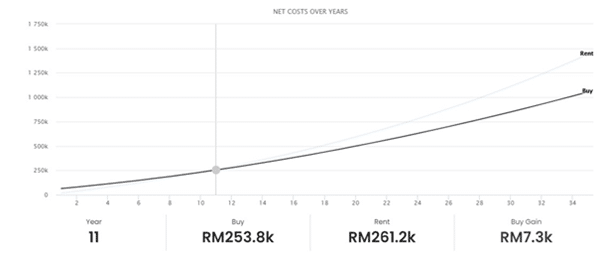
Comparison of cost patterns between renting and buying over time
Renting typically involves lower upfront costs but does not build ownership, while buying requires significant initial investment but can generate equity over time. The outcome depends heavily on how long you stay and how the property market performs.
For deeper insights into Malaysia’s rental trends and tenant behavior, refer to this detailed guide2.
Renting in Malaysia: Why Many Still Prefer It
Renting remains a popular option, especially among younger Malaysians and professionals who value flexibility.
One key advantage is the lower upfront cost, as renters avoid down payments, legal fees, and stamp duties. This makes it easier to access housing without large savings.
Flexibility is another major factor. Renting allows individuals to relocate easily for career opportunities, which is particularly important for younger professionals prioritizing mobility3.
Additionally, renting reduces financial risk. Without long-term loan commitments, renters are less exposed to market fluctuations and economic uncertainty, which many discussions highlight as a key concern4.
More insights on rental dynamics and market conditions can be explored here5.
Buying Property in Malaysia: The Case for Ownership
Despite higher costs, buying property continues to appeal to those looking for long-term financial growth and stability.
Owning a home allows individuals to build equity over time, turning monthly payments into an investment rather than an expense. Market observations suggest that property can deliver long-term returns depending on timing and location6.
Homeownership also provides stability and control, eliminating concerns such as rent increases or landlord restrictions.
Some buyers go further by treating property as an income-generating asset, renting it out to cover loan repayments, although this depends heavily on market demand7.
The Condo Debate: Renting vs Buying Gets Tricky
Condominiums are a common choice in urban Malaysia, but the financial comparison between renting and buying them is not always straightforward.
Some analyses indicate that renting a condo may be more cost-effective than buying in certain situations, even over several years8.
This is largely due to additional ownership costs such as maintenance fees, sinking funds, and property taxes, which can reduce overall returns.
Whether buying or renting is better often depends on location and price trends within specific markets9.
A Practical Framework: 5 Questions to Ask Yourself
Making the right decision requires more than comparing costs. A structured approach can help clarify what works best for your situation.
Financial experts suggest asking key questions about affordability, stability, and long-term plans before committing to property decisions10.
- Can you afford the upfront costs?
- Are you financially stable for long-term commitments?
- How long do you plan to stay?
- What are your lifestyle priorities?
- Are you prepared for maintenance and unexpected costs?
What Real Malaysians Are Saying
Real-world opinions show that there is no single correct answer when it comes to renting versus buying.
Many Malaysians emphasize that the decision depends on income, career stage, and personal goals, with some prioritizing flexibility while others focus on long-term wealth building11.
Special Considerations for Foreign Buyers
For non-Malaysians, buying property involves additional complexities such as minimum purchase requirements, legal restrictions, and higher taxes.
These factors often make renting a more practical option initially, especially for those unfamiliar with the local property market12.
When Renting Makes More Sense
- You move frequently for work
- You lack sufficient savings for upfront costs
- You prefer flexibility over long-term commitment
- You are uncertain about your long-term location
When Buying Makes More Sense
- You plan to stay in one place for many years
- You have stable income and financial reserves
- You want to build long-term wealth
- You are prepared for maintenance responsibilities
The Role of Property Platforms
Property platforms help Malaysians compare listings, prices, and locations, making the search process easier. However, these tools should support decision-making, not replace careful financial planning.
Final Thoughts: There’s No One-Size-Fits-All Answer
Renting vs buying property in Malaysia ultimately depends on your personal goals, financial readiness, and lifestyle preferences.
In 2026, flexibility and cautious decision-making are becoming increasingly important. Both renting and buying are valid choices when aligned with your needs.
The best decision is not about timing the market perfectly, but about choosing what works for your life right now.
Frequently Asked Questions
Question: Is renting cheaper than buying in Malaysia?
Answer: Renting is usually cheaper in the short term due to lower upfront costs, but buying can build equity over time depending on market conditions.
Question: How long should I stay before buying property makes sense?
Answer: Buying typically makes more sense if you plan to stay in one place for at least 5 to 10 years, allowing time to offset initial costs.
Question: Are condos a good investment in Malaysia?
Answer: Condos can be a good investment, but additional costs like maintenance fees and market conditions must be carefully evaluated.
Disclaimer: The information is provided for general information only. BridgeProperties makes no representations or warranties in relation to the information, including but not limited to any representation or warranty as to the fitness for any particular purpose of the information to the fullest extent permitted by law. While every effort has been made to ensure that the information provided in this article is accurate, reliable, and complete as of the time of writing, the information provided in this article should not be relied upon to make any financial, investment, real estate or legal decisions. Additionally, the information should not substitute advice from a trained professional who can take into account your personal facts and circumstances, and we accept no liability if you use the information to form decisions.
