)
.webp)
Renting versus buying property in Malaysia: What makes sense in 2026?
Key Takeaways
- No One-Size Answer: The right choice depends on personal financial stability, lifestyle, and future plans.
- Cost vs Flexibility: Renting offers flexibility and lower upfront costs, while buying builds long-term equity.
- Market Conditions Matter: Oversupply and shifting demand influence whether renting or buying is more practical.
- Emotional Factors Count: Decisions are often influenced by feelings of security or freedom, not just numbers.
- Preparation is Key: Financial readiness and long-term goals should guide your decision.
Why this debate matters more in 2026
Renting versus buying property in Malaysia is one of the biggest financial decisions people face today. In 2026, the conversation feels louder than ever as rising living costs, shifting job markets, and evolving lifestyle priorities reshape how people think about property ownership.
Online discussions highlight how personal circumstances now play a bigger role than ever, with many pointing out that flexibility can outweigh long-term ownership in uncertain times1.
This shift reflects a broader reality: the decision is no longer purely financial. Lifestyle, stability, and future mobility are just as important when choosing between renting and buying.
The real math: renting vs buying
Many assume buying is always the smarter financial move, but that’s not necessarily true in today’s market. In some areas, renting can be significantly cheaper in the short term, especially when factoring in avoided upfront costs like deposits, legal fees, and maintenance2.
Buying, however, allows you to build equity over time, turning monthly payments into a long-term asset rather than a pure expense.
Market conditions such as property oversupply in major cities also influence whether renting or buying makes more financial sense at any given time3.
What Malaysians are really saying
Community discussions reveal just how divided opinions are. Some argue that owning property limits investment opportunities, while others believe renting is equivalent to paying off someone else’s mortgage4.
Other conversations show how emotional this decision can be, with individuals placing different levels of importance on security, independence, and pride of ownership5.
Even broader community groups highlight how family needs and lifestyle choices heavily influence whether renting or buying is the better path6.
A simple way to think about it
A structured way to approach this decision is by evaluating financial readiness, long-term stability, and personal goals. Key considerations include affordability, job security, and how long you plan to stay in one place7.
Visualizing the difference
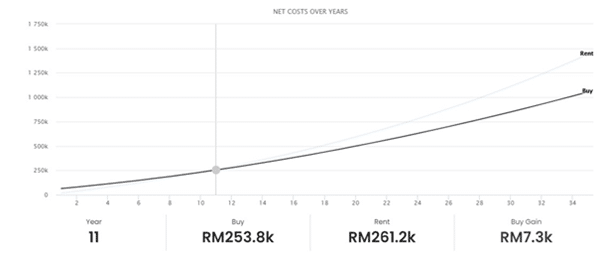
Comparison of long-term cost trends and equity growth between renting and buying property
Over time, renting tends to maintain stable costs, while buying starts with higher expenses but may generate value in the long run through equity accumulation.
The lifestyle factor people underestimate
Renting offers flexibility, making it easier to relocate, upgrade, or adapt to career changes. This is especially relevant in a world where job mobility is increasingly common.
Buying, on the other hand, provides stability and control over your living space, eliminating uncertainties like rent increases or landlord decisions.
Location also plays a critical role, as some areas clearly favor renting while others make buying more attractive depending on pricing and demand8.
What young professionals should know
For younger individuals, financial readiness and career stability are key deciding factors. Those with uncertain income or evolving career paths may benefit more from renting in the early stages9.
Committing to a mortgage too early can create pressure and limit opportunities, especially if unexpected costs arise or career changes become necessary.
The psychology behind the decision
Beyond finances, emotional factors play a significant role. Some individuals associate homeownership with security, while others value the freedom that comes with renting10.
Understanding your personal mindset can help ensure that your decision aligns with your long-term satisfaction.
Thinking about investing? Read this first
Buying property as an investment comes with its own challenges, including managing tenants, handling maintenance, and dealing with vacancy risks. It requires active involvement and careful planning rather than being a passive income source11.
Understanding rental demand and market behavior is essential before making any investment decisions12.
When renting makes more sense
- Short-Term Plans: Ideal if you plan to relocate within a few years.
- Limited Savings: Suitable when you lack funds for a down payment.
- Unstable Income: Reduces financial pressure during uncertain periods.
- Flexibility Needs: Easier to adapt to lifestyle or career changes.
When buying makes more sense
- Long-Term Stay: More beneficial if you plan to stay for many years.
- Stable Finances: Requires consistent income and savings.
- Equity Building: Helps grow long-term wealth.
- Personal Control: Offers stability and ownership freedom.
The hidden costs people forget
Buying property involves additional expenses beyond the purchase price, including legal fees, taxes, maintenance, and repairs. These costs can significantly impact affordability.
Renting typically involves fewer hidden costs, making it more predictable in the short term.
How to start your decision
Start by evaluating your financial position, including savings, income stability, and long-term commitments. Then consider your lifestyle preferences, such as location flexibility and future plans.
Exploring available properties and understanding market trends can also help you make a more informed decision.
The bottom line
Renting versus buying property in Malaysia is not a one-size-fits-all decision.
In 2026, the smartest approach is to focus on your current financial situation, lifestyle needs, and long-term goals rather than external pressure.
The best choice is simply the one that fits your life right now.
Frequently Asked Questions
Question: Is renting cheaper than buying in Malaysia?
Answer: In many cases, renting is cheaper in the short term due to lower upfront costs, but buying may provide long-term financial benefits through equity.
Question: How long should I stay before buying makes sense?
Answer: Buying typically makes more sense if you plan to stay in the property for several years, allowing you to offset initial costs and build equity.
Question: Should young professionals rent or buy first?
Answer: Young professionals often benefit from renting first, especially if their income or career path is still evolving.
Disclaimer: The information is provided for general information only. BridgeProperties makes no representations or warranties in relation to the information, including but not limited to any representation or warranty as to the fitness for any particular purpose of the information to the fullest extent permitted by law. While every effort has been made to ensure that the information provided in this article is accurate, reliable, and complete as of the time of writing, the information provided in this article should not be relied upon to make any financial, investment, real estate or legal decisions. Additionally, the information should not substitute advice from a trained professional who can take into account your personal facts and circumstances, and we accept no liability if you use the information to form decisions.
