)
.webp)
Home Improvement Market Malaysia: Growth, Trends, and What It Means in 2026
Key Takeaways
- Market Growth: The industry is expanding steadily with strong long-term projections.
- DIY Influence: Rising DIY culture is significantly shaping consumer behavior.
- Urban Impact: Smaller living spaces are driving demand for smart home solutions.
- Retail Dominance: Major players like Mr. DIY are transforming the market landscape.
- Future Outlook: Continued growth is expected through 2030 driven by lifestyle shifts.
A Rapidly Growing Market
The Home Improvement Market Malaysia has grown steadily over recent years, fueled by urban migration, rising incomes, and increased time spent at home. Market projections indicate continued expansion through 2030, supported by long-term consumer demand and evolving lifestyles1.
Statistical data further confirms this upward trajectory, showing consistent growth in market size between 2019 and 2022, reflecting strong consumer engagement in home-related spending2.
Detailed projections also highlight sustained expansion across multiple segments, indicating that investment in home improvement is becoming a long-term trend rather than a temporary shift3.
Why Malaysians Are Spending More on Home Improvement
Urban living is reshaping housing needs, with smaller spaces driving demand for smarter layouts, multifunctional furniture, and cost-effective renovation solutions. Homeowners are increasingly focused on optimizing rather than just decorating their spaces.
DIY culture has also become a major driver, with more consumers choosing to fix, upgrade, and personalize their homes independently, increasing demand for tools and accessible solutions4.
At the same time, affordability remains a key priority, pushing consumers toward budget-friendly products that still deliver acceptable quality and convenience.
The Rise of Mr. DIY: A Market Leader
Mr. DIY has emerged as a dominant force in Malaysia’s home improvement sector, growing from a single outlet into a nationwide retail powerhouse with a strong focus on affordability and accessibility5.
The company’s business model, centered on low-cost offerings and extensive product variety, has positioned it as a market leader and reshaped consumer expectations in the industry6.
Its expansion strategy and public listing efforts further highlight the scale of its influence and ambition within the growing market7.
But It’s Not All Smooth Sailing
Despite strong growth, the market faces challenges, particularly around product quality and customer experience. Consumer discussions reveal concerns about overcrowded stores and inconsistent product standards, highlighting the need for businesses to balance affordability with reliability8.
Market Segmentation: Where the Money Goes
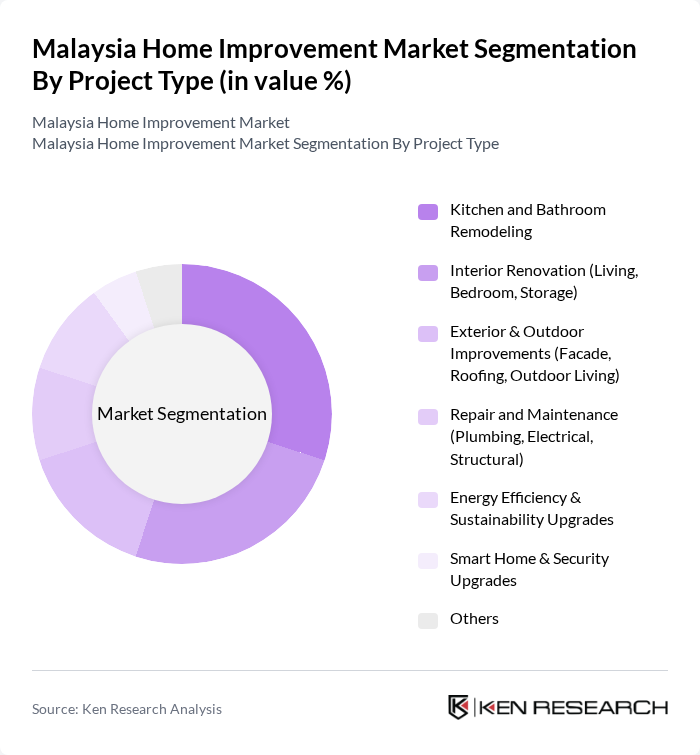
Distribution of home improvement spending across renovation, maintenance, decorative, and DIY project categories in Malaysia
Home improvement spending in Malaysia is distributed across renovations, maintenance, decorative upgrades, and DIY activities, reflecting diverse consumer priorities and lifestyle needs.
Industry Partnerships and Innovation
Strategic collaborations are also shaping the industry, with companies integrating complementary solutions such as paints, adhesives, and construction materials to offer more comprehensive services to consumers9.
Learning from Global Markets
Insights from more mature markets like the UK highlight the importance of strong retail networks, stable demand, and advanced product offerings, providing a useful benchmark for Malaysia’s continued growth10.
What This Means for Businesses
The Home Improvement Market Malaysia presents significant opportunities for businesses that can adapt to changing consumer expectations, particularly in pricing, product variety, and customer experience.
- Affordable pricing strategies
- Wide product selection
- Strong branding
- Enhanced digital and in-store experiences
Balancing cost with quality and maintaining customer trust will be essential for long-term success.
What This Means for Consumers
Consumers benefit from increased competition, which brings more choices, better pricing, and easier access to tools and materials for DIY and home upgrades.
- Compare product quality carefully
- Avoid decisions based solely on price
- Plan projects in advance
With more options available, making informed decisions becomes increasingly important.
The Future of Home Improvement in Malaysia
The market is expected to remain dynamic, driven by ongoing urbanization, growing DIY culture, expanding retail networks, and increasing demand for affordable solutions.
- Continued urbanization
- Growth of DIY culture
- Expansion of retail chains
- More industry partnerships
- Rising demand for affordability
Final Thoughts
The Home Improvement Market Malaysia in 2026 reflects a powerful shift in how people view and invest in their living spaces.
Driven by evolving lifestyles, strong retail players, and increasing consumer awareness, the industry is set to grow even further in the coming years.
For businesses, it offers room for innovation. For consumers, it opens up new possibilities to create better, more functional homes.
Frequently Asked Questions
Question: What is driving the growth of the home improvement market in Malaysia?
Answer: The growth is driven by urbanization, rising incomes, increased DIY interest, and more time spent at home.
Question: Why is DIY becoming popular in Malaysia?
Answer: DIY is জনপ্র gaining popularity due to cost savings, accessibility of tools, and a growing desire for personalized living spaces.
Question: What should consumers consider before starting home improvement projects?
Answer: Consumers should evaluate product quality, compare prices, and plan their projects carefully to avoid unnecessary costs.
Disclaimer: The information is provided for general information only. BridgeProperties makes no representations or warranties in relation to the information, including but not limited to any representation or warranty as to the fitness for any particular purpose of the information to the fullest extent permitted by law. While every effort has been made to ensure that the information provided in this article is accurate, reliable, and complete as of the time of writing, the information provided in this article should not be relied upon to make any financial, investment, real estate or legal decisions. Additionally, the information should not substitute advice from a trained professional who can take into account your personal facts and circumstances, and we accept no liability if you use the information to form decisions.
