)
.webp)
Renting vs Buying Property in Malaysia: What Makes Sense in 2026?
Key Takeaways
- No One-Size-Fits-All: Renting and buying both have advantages depending on financial goals and lifestyle.
- Upfront vs Long-Term Costs: Buying requires heavy initial costs, while renting offers flexibility with lower entry barriers.
- Investment Perspective Matters: Renting while investing elsewhere can sometimes outperform property ownership.
- Hidden Costs Exist: Maintenance, taxes, and interest can significantly increase the true cost of owning property.
- Emotional vs Financial Decision: The right choice balances both personal comfort and long-term financial planning.
The Changing Conversation Around Property in Malaysia
The question of renting vs buying property is once again dominating conversations across Malaysia in 2026, driven by rising costs, changing lifestyles, and greater access to financial insights1.
It is no longer just about owning a home as a life milestone. Today, Malaysians are weighing flexibility, financial returns, and long-term commitments more carefully than ever before.
The Viral Debate: Is Renting Actually Smarter?
A growing argument suggests that renting while investing savings elsewhere can sometimes yield better financial outcomes than buying property, especially when factoring in opportunity costs and market returns2.
This challenges the long-standing belief that homeownership is always the smarter move. The reality is more nuanced, with outcomes heavily influenced by interest rates, property appreciation, and rental yields.
- Monthly mortgage vs rent costs
- Maintenance fees and hidden expenses
- Opportunity cost of down payments
- Potential investment returns
The 5 Big Questions You Must Answer First
Before making a decision, financial guidance emphasizes evaluating affordability, long-term stability, and lifestyle needs to determine whether renting or buying aligns better with your situation3.
- Can you afford upfront costs?
- Are you financially stable long-term?
- How long will you stay?
- Do you prefer flexibility or stability?
- Are you ready for maintenance responsibilities?
What the Data Says About Renting vs Buying
Market insights show that both renting and buying offer distinct advantages, but outcomes vary widely depending on location, pricing trends, and rental demand4.
- Buying builds long-term equity and stability
- Renting offers flexibility and lower upfront costs
- Property appreciation is not always guaranteed
For deeper insights into rental trends and investment dynamics, exploring broader market behavior can provide useful context5.
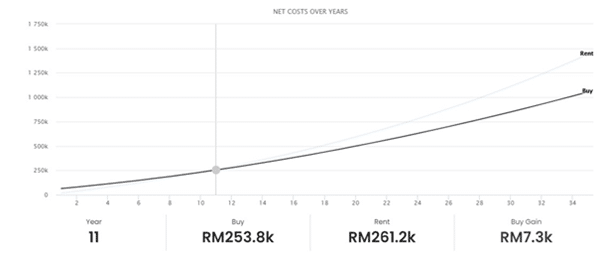
Comparison of long-term financial impact between renting and owning residential property
Real Voices from the Ground
Online discussions reveal mixed experiences among Malaysians, with some highlighting affordability challenges and others pointing to investment opportunities in certain regions6.
At the same time, debates across social platforms show a generational divide, where younger individuals prioritize flexibility while older groups tend to favor ownership for security7.
Can You Buy and Rent It Out Immediately?
While buying property and renting it out immediately is possible, it depends heavily on demand, location, and rental yield, with risks such as vacancies and insufficient returns8.
This reinforces the idea that property investment requires active planning rather than being a guaranteed passive income stream.
The Hidden Costs People Often Ignore
Many buyers underestimate the true cost of ownership, which includes maintenance, taxes, renovations, and long-term loan interest that can significantly increase total expenses over time.
Renters, on the other hand, face recurring costs without building equity, along with potential rent increases and limited control over living spaces.
Technology Is Changing Property Decisions
Technology is reshaping how people approach property decisions, with apps and platforms enabling users to compare prices, analyze trends, and make more informed financial choices9.
This shift reflects a broader move toward data-driven decision-making in real estate.
Renting vs Buying Property: Who Should Rent?
- You value flexibility and mobility
- You are early in your career
- You prefer lower upfront costs
- You want to invest money elsewhere
Renting vs Buying Property: Who Should Buy?
- You plan to stay long-term
- You have stable income
- You want to build equity
- You prefer ownership stability
The Emotional Side of the Decision
Owning a home offers security and personal freedom, while renting provides convenience and less responsibility. The decision often comes down to personal priorities rather than purely financial outcomes.
So, What’s the Verdict in 2026?
There is no universal winner in the renting vs buying debate. The smarter approach is to evaluate your finances, lifestyle goals, and long-term plans carefully before making a decision.
As perspectives evolve, Malaysians are becoming more analytical and less emotionally driven when it comes to property decisions.
Final Thoughts
The renting vs buying property question continues to evolve alongside economic shifts and changing lifestyles.
The best approach is simple: understand your numbers, define your goals, and make a decision that fits your life—not someone else’s expectations.
In 2026, smart property decisions are not about following trends, but about choosing wisely.
Frequently Asked Questions
Question: Is renting a waste of money in Malaysia?
Answer: No, renting can be a strategic financial choice, especially if it allows you to invest your savings elsewhere or maintain flexibility.
Question: When does buying property make more sense?
Answer: Buying makes more sense when you have stable income, plan to stay long-term, and are ready to handle upfront and ongoing costs.
Question: Can rental income cover a mortgage in Malaysia?
Answer: It depends on location and demand. In some areas it is possible, but many properties may not generate enough rental income to fully cover mortgage payments.
Disclaimer: The information is provided for general information only. BridgeProperties makes no representations or warranties in relation to the information, including but not limited to any representation or warranty as to the fitness for any particular purpose of the information to the fullest extent permitted by law. While every effort has been made to ensure that the information provided in this article is accurate, reliable, and complete as of the time of writing, the information provided in this article should not be relied upon to make any financial, investment, real estate or legal decisions. Additionally, the information should not substitute advice from a trained professional who can take into account your personal facts and circumstances, and we accept no liability if you use the information to form decisions.
