)
.webp)
Property Rental Market in Malaysia: Trends, Challenges, and What It Means in 2026
Key Takeaways
- Rising Rental Demand: More Malaysians are choosing to rent due to affordability challenges and lifestyle shifts.
- Market Pressure: High prices, uneven supply, and inconsistent property quality are straining the rental market.
- Investment Complexity: Property investment now requires careful strategy due to risks like oversupply and policy changes.
- Urban Constraints: Limited space in cities is pushing rental prices higher and reducing available housing options.
- Technology Impact: Digital platforms are improving transparency and helping renters make informed decisions.
A Rental Boom Is Taking Over
The property rental market in Malaysia is experiencing a strong surge in demand as more people turn to renting instead of buying homes, driven by affordability challenges and evolving lifestyle preferences1.
This growing demand reflects a broader shift in housing behavior, where flexibility and financial caution are becoming more important than long-term ownership commitments. For deeper insights into market trends and tenant behavior, additional analysis is available2.
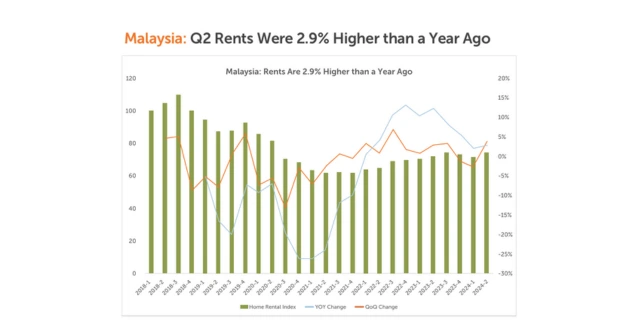
Rental demand trends across Malaysia highlighting growth patterns in urban housing markets
Recent market observations also show consistent year-over-year increases in rental activity, reinforcing the idea that renting is becoming a long-term norm rather than a temporary phase.
Why Malaysians Are Renting Instead of Buying
Several key factors explain why more Malaysians are choosing to rent rather than purchase homes.
- Buying a home is becoming less affordable
- Younger generations prefer flexibility
- Urban migration continues to grow
- Loan conditions and interest rates are tighter
Urban living trends also play a major role, especially in cities like Kuala Lumpur where high property prices make renting the more practical option for many residents3.
A Market Under Pressure
Despite rising demand, the rental market is facing structural challenges that affect both tenants and landlords. Public discussions increasingly highlight concerns about pricing, maintenance quality, and lack of standardization4.
- High rental prices in urban areas
- Poor maintenance in some properties
- Lack of standardized rental regulations
- Tenant dissatisfaction
This imbalance between supply and quality creates frustration for renters who struggle to find suitable housing despite strong availability.
Is Property Still a Good Investment?
While rising rental demand may seem attractive for investors, real-world sentiment shows mixed opinions about property investment viability5.
- Potential rental income
- Long-term capital appreciation
- Strong demand in key cities
- Market volatility
- Oversupply risks
- Policy uncertainty
- Tenant-related issues
Success in property investment now depends heavily on strategic decision-making, particularly in choosing the right location and understanding tenant demand patterns.
The Hidden Problem: Discrimination in Renting
Discrimination remains a serious issue within the rental market, where tenant selection may be influenced by race or ethnicity, affecting fairness and accessibility6.
This creates broader challenges, including reduced trust between landlords and tenants and inefficiencies in how housing is allocated across the market.
Space Is Running Out in Cities
Urban density and land constraints are becoming increasingly significant, limiting the development of new housing and contributing to higher rental prices7.
- Higher property prices
- Smaller living spaces
- Limited new supply in prime areas
Developers are now under pressure to balance space efficiency with livability in densely populated cities.
Foreign Investment: A Double-Edged Sword
Foreign investment continues to influence Malaysia’s property market, bringing both opportunities and risks depending on market conditions and regulations8.
- Boosts development and market activity
- Attracts international interest
- May increase property prices
- Reduces affordability for locals
- Adds volatility to the market
The Financial System Shapes Everything
The rental market is closely linked to Malaysia’s financial system, where lending rules and interest rates directly influence whether people rent or buy homes9.
When financing becomes more restrictive, renting becomes the default choice for many households.
Understanding the Housing Journey
Housing is often viewed as a continuum where individuals move between different stages based on income and life circumstances, with renting playing a longer role in modern housing pathways10.
In 2026, more Malaysians are remaining in the rental stage for extended periods compared to previous generations.
Technology Is Changing the Rental Experience
Digital platforms are transforming how people search for and evaluate rental properties, offering better access to pricing data and market insights11.
This increased transparency benefits both renters and investors by enabling more informed decisions.
What This Means for Renters
Renters in Malaysia should expect rising prices, increased competition, and varying property quality across different locations.
- Research rental prices carefully
- Use reliable property platforms
- Inspect properties before committing
What This Means for Investors
Investors must adopt a more strategic approach, focusing on location, tenant needs, and evolving market dynamics.
- Choose locations with strong demand
- Understand tenant preferences
- Monitor policy changes
What Could Happen Next?
The future of Malaysia’s rental market may include build-to-rent developments, stronger regulations, improved transparency, and continued urban demand growth.
Final Thoughts
The property rental market in Malaysia in 2026 is undergoing a significant transformation driven by economic pressures and changing lifestyles.
As renting becomes a long-term housing solution for many, both renters and investors must adapt to a more complex and competitive environment.
This shift highlights the importance of balanced policies, better housing standards, and smarter decision-making to ensure a sustainable future for Malaysia’s housing market.
Frequently Asked Questions
Question: Why is rental demand increasing in Malaysia?
Answer: Rental demand is rising due to higher living costs, reduced housing affordability, urban migration, and changing lifestyle preferences.
Question: Is renting better than buying in Malaysia in 2026?
Answer: It depends on individual financial situations, but many prefer renting due to flexibility and lower upfront costs.
Question: What are the main challenges in Malaysia’s rental market?
Answer: Key challenges include rising rental prices, inconsistent property quality, limited urban space, and lack of standardized regulations.
Disclaimer: The information is provided for general information only. BridgeProperties makes no representations or warranties in relation to the information, including but not limited to any representation or warranty as to the fitness for any particular purpose of the information to the fullest extent permitted by law. While every effort has been made to ensure that the information provided in this article is accurate, reliable, and complete as of the time of writing, the information provided in this article should not be relied upon to make any financial, investment, real estate or legal decisions. Additionally, the information should not substitute advice from a trained professional who can take into account your personal facts and circumstances, and we accept no liability if you use the information to form decisions.
